Demystifying Closing Costs for Home Buyers: Your Complete Guide
closing costs for home buyers

Demystifying Closing Costs for Home Buyers: Your Complete Guide

Navigate the complexities of home purchase expenses and secure your dream home with confidence and clarity.

Understand Your Costs

Key Takeaways

  • ✓ Closing costs typically range from 2% to 5% of the loan amount.
  • ✓ These costs are separate from your down payment and are due at closing.
  • ✓ Many closing costs are negotiable, especially lender fees.
  • ✓ You will receive a Loan Estimate and Closing Disclosure detailing all costs.
  • ✓ Prepaid expenses, like property taxes and insurance, are part of closing costs.

How It Works

1
Receive Your Loan Estimate

Within three business days of applying for a mortgage, your lender must provide a Loan Estimate. This document details your estimated interest rate, monthly payment, and closing costs, giving you an initial overview of potential expenses.

2
Review and Compare Offers

Use the Loan Estimate to compare offers from different lenders. Pay close attention to the 'Services You Cannot Shop For' and 'Services You Can Shop For' sections, as these will highlight areas where costs might vary significantly.

3
Negotiate and Plan

Once you've chosen a lender, you can often negotiate certain fees or ask the seller to contribute to closing costs. Plan for these expenses by setting aside funds well in advance of your closing date.

4
Receive and Sign Closing Disclosure

At least three business days before closing, you'll receive a Closing Disclosure. This final document lists all actual costs. Review it carefully against your Loan Estimate for any discrepancies before signing.

What Are Closing Costs and Why Do They Matter?
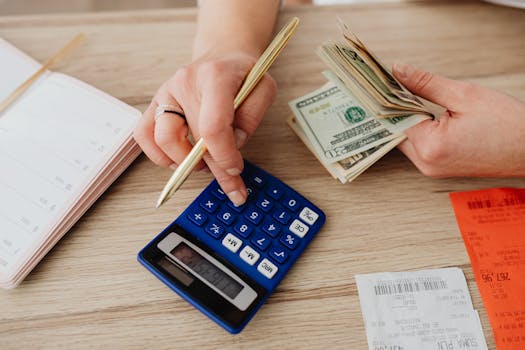
Hands handling cash and calculator for budget planning. Modern financial scene. Photo: https://kaboompics.com/ / Pexels
Embarking on the journey of homeownership is an exhilarating prospect, often filled with excitement about finding the perfect property. However, it's crucial for every prospective buyer to understand that the price tag on a home isn't the only financial consideration. Enter 'closing costs for home buyers,' a collection of fees and expenses paid at the close of a real estate transaction. These costs are essentially the administrative and legal fees associated with transferring property ownership and securing a mortgage, and they can significantly add to the overall expense of buying a home. Ignoring or underestimating these costs can lead to unpleasant surprises, financial strain, or even delays in closing. Closing costs typically encompass a wide array of charges from various parties involved in the transaction. This includes fees for your lender, title company, government entities, and other service providers. While they generally fall within a range of 2% to 5% of the loan amount, this percentage can translate into tens of thousands of dollars, depending on the home's price and your loan size. For instance, on a $400,000 home with a $320,000 mortgage, closing costs could easily amount to $6,400 to $16,000. This substantial sum needs to be factored into your budget alongside your down payment. Understanding each component of these costs is not just about budgeting; it's about being an informed consumer, capable of identifying potential overcharges, negotiating where possible, and ultimately, ensuring a smooth and stress-free path to homeownership. Many first-time home buyers are often caught off guard by the sheer volume and diversity of these fees, highlighting the critical importance of early education and meticulous planning. Familiarizing yourself with these expenses early in the process empowers you to make better financial decisions and avoids last-minute scrambling for funds. For more insights into the broader financial landscape of home buying, check out our guide on understanding real estate financing options.

Key Categories of Closing Costs Explained

Asian woman in business attire holding home insurance policy while on a phone call. Photo: Mikhail Nilov / Pexels
To truly grasp the implications of closing costs for home buyers, it's essential to break them down into their primary categories. While the specific items can vary by state and lender, they generally fall into three main groups: lender-related fees, title and escrow fees, and government recording fees and taxes. **Lender-Related Fees:** These are charges from your mortgage lender for processing your loan. They can include an application fee, which covers the cost of processing your loan application; a loan origination fee, often a percentage of the loan amount, paid to the lender for creating the loan; and discount points, which are optional fees paid upfront to reduce your interest rate. Other common lender fees include credit report fees, appraisal fees (to determine the home's value), and underwriting fees, which cover the cost of evaluating your loan application. It's important to note that some of these fees, particularly the loan origination fee and discount points, can be negotiable or vary significantly between lenders, making it worthwhile to shop around and compare Loan Estimates. **Title and Escrow Fees:** The title company plays a crucial role in ensuring that the property's title is clear and that ownership can be legally transferred. Their fees typically include a title search fee, which involves researching public records to confirm the seller's right to sell the property and uncover any liens or encumbrances. You'll also pay for title insurance – both a lender's policy (which protects the lender) and an owner's policy (which protects you, the buyer). Escrow fees, or settlement fees, are paid to the escrow company or attorney who handles the closing process, including holding funds and documents until all conditions of the sale are met. These fees ensure that your property transfer is legally sound and protected from future claims. **Government Recording Fees and Taxes:** These are mandatory charges imposed by state and local governments. Recording fees are paid to the county or city to officially record the new deed and mortgage documents in public records. Transfer taxes, also known as stamp taxes or deed taxes, are levied by the state or local municipality when property changes hands. The amount of these taxes can vary widely by location and can sometimes be a significant portion of the total closing costs. Some states also have specific mortgage taxes or intangible taxes that apply. Understanding these categories helps demystify the line items on your Loan Estimate and Closing Disclosure, allowing you to anticipate and budget for each expense more accurately. This granular understanding is key to managing your finances effectively during the home buying process.

Navigating Prepaid Expenses and Other Miscellaneous Costs

Beyond the core lender, title, and government fees, closing costs for home buyers also include a category known as prepaid expenses and various other miscellaneous charges. These often catch buyers off guard because they are not direct fees for services rendered at closing but rather payments made in advance for ongoing property-related expenses. The most significant prepaid expenses typically involve property taxes and homeowners insurance. **Prepaid Property Taxes and Homeowners Insurance:** When you close on a home, you’ll usually be required to prepay a certain number of months of property taxes and homeowners insurance premiums into an escrow account. This ensures that these crucial payments are made on time, protecting both your investment and the lender's interest. The exact number of months required varies, but it's common to prepay 2-6 months of homeowners insurance and sometimes up to a year of property taxes, depending on your local tax cycle and when the next payment is due. While these are technically 'your' expenses, the upfront lump sum can be substantial and must be included in your closing cost calculations. It's crucial to obtain accurate estimates for these from your insurance provider and the local tax assessor's office well before closing. **Other Miscellaneous Costs:** This category can be a catch-all for various smaller, but still important, fees. It might include HOA (Homeowners Association) fees, especially if the property is part of an HOA, where you might need to pay a prorated amount for the current month and sometimes an initial setup or transfer fee. Survey fees are paid to a surveyor to verify property lines and identify any encroachments. Pest inspection fees and home inspection fees, while often paid directly to the inspector outside of the closing table, are still essential expenses associated with buying a home and should be budgeted for. Flood certification fees determine if the property is in a flood zone, which could necessitate flood insurance. Finally, attorney fees, if you choose to hire your own real estate attorney (or if it's required in your state), will also be part of your overall closing expenses. Each of these items, though seemingly minor individually, can accumulate, making a comprehensive understanding of all potential costs vital for a successful closing. For a deeper dive into protecting your investment, explore our resources on understanding homeowners insurance policies.

Strategies to Reduce and Manage Closing Costs

While closing costs for home buyers are an unavoidable part of the real estate transaction, there are several effective strategies you can employ to potentially reduce them or manage their impact on your budget. Being proactive and informed can save you thousands of dollars. **1. Negotiate Lender Fees:** Many lender-related fees are not set in stone. The loan origination fee, for instance, is often negotiable. Compare Loan Estimates from multiple lenders and use competitive offers as leverage. Ask if they can waive certain fees or reduce their percentage. Even a small reduction can add up. **2. Shop for Third-Party Services:** Your Loan Estimate will clearly separate 'Services You Cannot Shop For' from 'Services You Can Shop For.' For services you can shop for, such as title insurance, appraisal, and surveys, get quotes from several different providers. Your lender may have preferred providers, but you are generally not obligated to use them. Comparing bids can lead to significant savings. **3. Ask the Seller for Concessions:** In a buyer's market or if the seller is eager to close, you might be able to negotiate for the seller to pay a portion of your closing costs. This is often structured as a 'seller credit' towards closing costs. The amount a seller can contribute is typically capped by your loan type (e.g., FHA, VA, Conventional) and down payment percentage. Discuss this option with your real estate agent, as it can be a powerful negotiation tool. **4. Look for Lender Credits:** Some lenders offer a 'lender credit' in exchange for a slightly higher interest rate. This credit can offset your closing costs. While it means paying more over the life of the loan, it can be beneficial if you're short on upfront cash or plan to refinance in the near future. Carefully weigh the long-term cost against the immediate savings. **5. Consider a No-Closing-Cost Mortgage:** Some lenders offer 'no-closing-cost' mortgages, where they absorb the closing costs. However, this usually comes at the expense of a higher interest rate on your loan. Over time, the increased interest payments could far exceed the initial closing costs saved, so this option requires careful calculation based on how long you plan to stay in the home. **6. Review Your Loan Estimate and Closing Disclosure Meticulously:** These documents are your best friends. Compare them carefully. If there are significant discrepancies between the Loan Estimate and the Closing Disclosure, especially in the 'Services You Cannot Shop For' section, question them immediately. Federal law limits how much these fees can increase from the estimate to the final disclosure. **7. Utilize First-Time Home Buyer Programs:** Many states and local governments offer assistance programs for first-time home buyers, which can include grants or low-interest loans to help cover down payments and closing costs. Research programs available in your area. **8. Close at the End of the Month:** This strategy can sometimes reduce prepaid interest. Interest is typically paid in arrears, meaning you pay interest for the previous month. If you close at the end of the month, you'll only pay interest for a few days of that month, rather than an entire month, before your first full mortgage payment is due. By strategically applying these methods, you can significantly mitigate the financial burden of closing costs, making your homeownership dream more attainable and less stressful.

Comparison

FeatureTraditional ClosingSeller Credit OptionLender Credit Option
Upfront Cash OutlayHigher (full closing costs)Potentially Lower (seller pays some)Lower (lender pays some)
Loan Interest RateStandard (lowest possible)Standard (lowest possible)Higher (in exchange for credit)
Negotiation PotentialLender fees, 3rd party servicesSeller contributionInterest rate vs. credit amount
Long-Term CostLower (if interest rate is lowest)Potentially lower (if seller contribution is significant)Higher (due to increased interest)

What Readers Say

"Understanding closing costs for home buyers felt overwhelming until I found this guide. It broke down every fee clearly, allowing me to budget effectively and even negotiate some charges with my lender. Highly recommend!"

Sarah J. · Austin, TX

"As a first-time homebuyer, I was dreading the hidden costs. This resource explained prepaid expenses and title fees in a way that made sense, helping me save about $3,000 by knowing what to ask for."

Mark D. · Orlando, FL

"The section on negotiating closing costs was a game-changer. I used the tips to get my seller to contribute, which reduced my upfront cash by nearly $5,000. This article is a must-read for anyone buying a home."

Emily R. · Denver, CO

"Very comprehensive overview. While some specific state taxes weren't covered in detail, the general breakdown of lender fees and prepaid items was incredibly helpful. It definitely prepared me better than just relying on my lender's initial estimate."

David L. · Seattle, WA

"I used this guide to compare Loan Estimates from three different lenders. It helped me spot significant differences in fees and ultimately choose the most cost-effective mortgage. Essential reading for smart home buyers!"

Jessica M. · Chicago, IL

Frequently Asked Questions

What is the average percentage of closing costs for home buyers?

Closing costs for home buyers typically range from 2% to 5% of the total loan amount. This percentage can vary significantly based on your location, the type of loan you secure, and the specific fees charged by your lender and other service providers involved in the transaction. It's crucial to get a detailed estimate early in the process.

Are closing costs included in my mortgage or do I pay them separately?

Generally, closing costs are paid separately and upfront at the time of closing. They are not typically rolled into your mortgage loan, though some specific loan programs or lender credits might offer options to help cover them, often in exchange for a higher interest rate. It's important to budget for these as a distinct expense.

How can I get an accurate estimate of my closing costs?

The most accurate estimate for your closing costs will come from your mortgage lender in the form of a 'Loan Estimate.' This document, provided within three business days of applying for a mortgage, details all projected costs. You should also get quotes for services you can shop for, like title insurance and home appraisals, to refine your estimate.

Is it possible to negotiate closing costs?

Yes, many closing costs are negotiable! Lender fees, such as origination fees, can often be reduced or waived. You can also shop around for third-party services like title insurance and appraisals. Additionally, in certain market conditions, you may be able to negotiate with the seller to pay a portion of your closing costs as a concession.

What is the difference between a Loan Estimate and a Closing Disclosure?

The Loan Estimate is an initial projection of your loan terms and closing costs, provided shortly after you apply for a mortgage. The Closing Disclosure is the final, legally binding document provided at least three business days before closing, detailing the actual costs. You should carefully compare these two documents for any discrepancies.

Who typically pays for closing costs, the buyer or the seller?

In most real estate transactions, the buyer is responsible for the majority of the closing costs. However, it is common for sellers to pay certain fees, such as real estate agent commissions and some transfer taxes. Buyers can also negotiate with sellers to cover a portion of their closing costs as part of the purchase agreement.

Are there programs to help first-time home buyers with closing costs?

Absolutely! Many states, counties, and cities offer various assistance programs for first-time home buyers, which can include grants, low-interest loans, or down payment assistance that can also be applied to closing costs. Research local housing authorities and non-profit organizations in your area for available programs.

How will future interest rate changes impact my closing costs?

Future interest rate changes won't directly impact the closing costs you pay at the time of your home purchase. Closing costs are specific fees due at settlement. However, if you choose a 'no-closing-cost mortgage' with a higher interest rate, future rate drops might make refinancing more attractive, allowing you to secure a lower rate and potentially lower your monthly payments.

Don't let closing costs for home buyers be a mystery. Arm yourself with knowledge, negotiate wisely, and plan effectively to ensure a smooth and affordable path to your new home. Start your journey to confident homeownership today.

Topics: closing costs for home buyersreal estate closing feeshome purchase expensesmortgage closing costsprepaid expenses real estate
Leo List

DK Escorts LU Escorts AT Escorts SE Escorts FI Escorts CH Escorts DE Escorts HR Escorts IE Escorts GR Escorts CZ Escorts NO Escorts BE Escorts FR Escorts SI Escorts IL Escorts NL Escorts PL Escorts HU Escorts ES Escorts IT Escorts PT Escorts SK Escorts RO Escorts ZA Escorts UY Escorts US Escorts UK Escorts NZ Escorts AU Escorts
Brampton weed
Adultwork EstrelaBet Vai de Bet R7 Bet Betão Galera Bet Rainbet Bet9ja Shop SportyBet BetKing Sisal Loto Foot Hollywoodbets YesPlay Odibets RushBet Jugabet BetWarrior BetCity MSport betPawa Fortebet