
Unlocking 2024: Real Estate Market Predictions US
real estate market predictions 2024 us

Unlocking 2024: Real Estate Market Predictions US

Gain crucial insights into the evolving US housing landscape to make informed decisions as a buyer, seller, or investor.

Explore 2024 Insights

Key Takeaways

  • ✓ Mortgage rates are expected to stabilize, potentially dipping slightly in late 2024, but remain above pre-pandemic lows.
  • ✓ Housing inventory will likely see a modest increase, though still below historical averages, easing some competitive pressures.
  • ✓ Home price appreciation is predicted to slow significantly, with some markets experiencing minor corrections.
  • ✓ Buyer demand remains robust, driven by demographics and a continued desire for homeownership, despite affordability challenges.

How It Works

1
Understand Macroeconomic Drivers

Economic indicators like inflation, GDP growth, and employment rates heavily influence the housing market. Analyzing these provides a foundational understanding of upcoming trends.

2
Analyze Key Housing Metrics

Dive into specifics such as mortgage rate forecasts, inventory levels, sales volumes, and median home price changes. These metrics directly reflect the health and direction of the market.

3
Regional Market Deep Dive

Recognize that the 'US market' is an aggregation; local markets often behave differently. Research specific cities or states for tailored insights into their unique dynamics.

4
Develop Your Strategy

Based on the predictions and your personal goals, formulate a clear plan. This could involve adjusting buying timelines, pricing strategies for sellers, or investment criteria for landlords.

Navigating Mortgage Rate Volatility and its Impact on US Housing
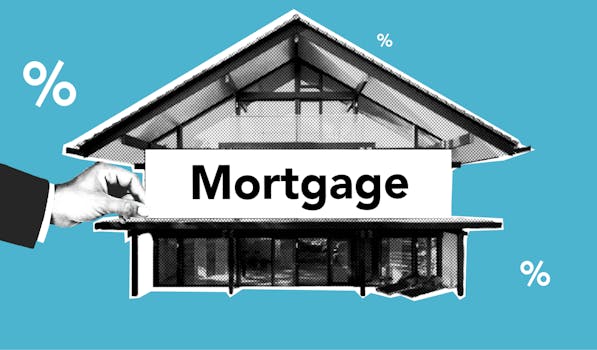
Cutout paper composition of realtor with inscription mortgage over house for purchases with payment of interest on amount of cost Photo: Monstera Production / Pexels
The trajectory of mortgage rates will undoubtedly be one of the most critical factors shaping the US real estate market in 2024. Following a period of unprecedented volatility, with rates reaching multi-decade highs in 2023, the consensus among economists and housing market experts points towards a stabilization, and perhaps even a slight moderation, in 2024. This isn't to say we'll return to the ultra-low rates seen during the pandemic, but rather that the sharp, upward swings may subside. The Federal Reserve's monetary policy, particularly its stance on inflation and the federal funds rate, will continue to be the primary driver. As inflation shows signs of cooling and the Fed potentially signals an end to its rate-hiking cycle, the bond market, which mortgage rates track closely, could find more stability. This stabilization is crucial for potential homebuyers, as it brings a degree of predictability back to monthly payments. When rates are highly volatile, many buyers sit on the sidelines, unsure of what their borrowing costs will be. A more predictable rate environment, even if still elevated compared to recent historical lows, can encourage hesitant buyers to re-enter the market. However, even with potential rate dips, affordability will remain a significant challenge. The cumulative effect of higher rates over the past two years means that purchasing power has been significantly eroded. A 7% mortgage rate on a median-priced home demands a much larger monthly payment than a 3% rate. This sustained pressure on affordability will likely continue to temper overall demand, particularly in higher-cost markets. First-time homebuyers, often relying on tighter budgets, will feel this pinch most acutely. They may need to consider smaller homes, different neighborhoods, or longer saving periods. For sellers, understanding the impact of rates is equally important. While a slight decrease in rates could bring more buyers to the table, it doesn't guarantee a return to the bidding wars of 2021. Sellers may need to adjust their pricing expectations to align with the current affordability landscape, and potentially offer incentives like rate buydowns to attract buyers. Investors will also be watching rates closely, as they directly affect the cost of capital and the potential returns on rental properties. Higher rates can make it more challenging to achieve positive cash flow, especially in markets where rental yields haven't kept pace with property values. The overall sentiment is that while rates will remain a hurdle, their anticipated stabilization should prevent further significant market contraction and could even provide a gentle tailwind for activity in the latter half of the year. For a deeper dive into how rates affect various market segments, consider exploring resources on mortgage trends.

Inventory Levels and Housing Supply Dynamics in 2024
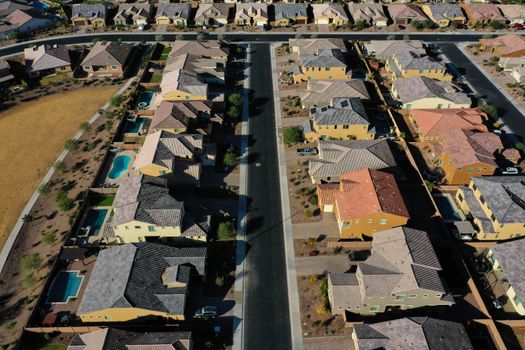
Aerial shot of a suburban residential area with neatly arranged houses and streets. Photo: Jesse Bannister / Pexels
One of the enduring narratives of the post-pandemic housing market has been the severe shortage of inventory. This imbalance between supply and demand has been a primary driver of rapid home price appreciation. As we look towards 2024, predictions suggest a modest, but not dramatic, increase in housing supply. Several factors contribute to this outlook. Firstly, the 'lock-in effect' continues to play a significant role. Many existing homeowners refinanced their mortgages at historically low rates in 2020-2021. The prospect of selling their current home and purchasing another at a much higher mortgage rate acts as a disincentive to move, effectively keeping desirable inventory off the market. While some life events (job changes, family growth, retirement) will always necessitate moves, this effect is expected to persist, albeit potentially softening slightly if rates decline. Secondly, new home construction, while showing signs of recovery, is still grappling with challenges. Labor shortages, supply chain issues (though less severe than in previous years), and higher material costs continue to impact builders' ability to ramp up production quickly and affordably. Despite these hurdles, new construction is expected to contribute more significantly to inventory in 2024 than in the preceding years, especially in more affordable price points and in growth markets. Builders have become more adept at navigating the current environment, focusing on smaller, more attainable homes. Thirdly, a softening of demand due to affordability constraints might lead to fewer homes selling quickly, thereby keeping them on the market longer and incrementally increasing the active listing count. This is less about new homes coming online and more about the pace of sales slowing down. However, it's crucial to temper expectations. Even with these contributing factors, the US housing market is not expected to suddenly be flooded with homes. Inventory levels will likely remain below historical averages, meaning that while buyers might have slightly more options, the market will still largely favor sellers, especially for well-priced, desirable properties. Highly competitive markets, particularly in desirable urban and suburban areas, will likely continue to experience relatively tight inventory. Regional variations will be pronounced, with some Sun Belt markets that saw rapid construction benefiting from increased supply, while established, land-locked coastal areas may see minimal change. The persistent under-supply means that any significant dip in mortgage rates could quickly absorb new listings, maintaining a level of competition. Understanding these supply dynamics is key for both buyers and sellers. Buyers should still be prepared to act decisively when a suitable property emerges, while sellers should focus on presentation and strategic pricing to stand out in a market that, while less frenzied, is still not buyer-dominated. The long-term trend of housing under-supply will continue to be a foundational element of the US real estate landscape.

Home Price Appreciation: A Shift Towards Moderation and Correction

A detailed financial trading chart showing a candlestick pattern with market trends. Photo: Rafael Minguet Delgado / Pexels
After several years of unprecedented home price growth, the US real estate market is poised for a significant shift in 2024: moderation. While a nationwide crash is not widely predicted by most experts, the pace of appreciation is expected to slow dramatically, with some markets potentially experiencing minor price corrections. This deceleration is a natural consequence of the affordability challenges created by higher mortgage rates and elevated home prices. The market simply cannot sustain the rapid appreciation seen in 2020-2022 when borrowing costs have more than doubled. Several reputable forecasting agencies, including Fannie Mae, Freddie Mac, and the National Association of Realtors, generally project low single-digit price growth for the US as a whole, ranging from a flat market to perhaps 2-3% appreciation. Some even predict a slight national decline, though typically in the low single digits. These national averages, however, mask significant regional variations. Markets that experienced the most rapid price growth during the pandemic boom, particularly in certain Sun Belt metros, are more susceptible to price corrections. These areas saw an influx of buyers and investors, often fueled by remote work flexibility and lower costs of living, which pushed prices to unsustainable levels. As those trends stabilize and affordability becomes a greater constraint, these markets may see prices adjust downwards to find a new equilibrium. Conversely, more stable, established markets with consistent job growth and strong underlying demand might continue to see modest appreciation, albeit at a much slower pace than in recent years. The absence of a large wave of foreclosures, supported by strong homeowner equity and responsible lending practices over the past decade, is a key factor preventing a widespread price collapse. Many homeowners have substantial equity, providing a buffer against economic downturns. This contrasts sharply with the conditions leading up to the 2008 financial crisis. For prospective buyers, this moderation in prices, combined with potentially stabilizing mortgage rates, could offer a window of opportunity. While homes won't necessarily become 'cheap,' the intense bidding wars might become less common, and buyers may regain some negotiation power. Sellers, on the other hand, will need to recalibrate their expectations. The days of listing a home and receiving multiple offers above asking price within hours are largely over. Strategic pricing, home staging, and effective marketing will be paramount. Patience may also be required, as homes could spend longer on the market. Understanding these nuanced price dynamics is crucial for making informed decisions in 2024. For those interested in regional differences, exploring a local market analysis can provide more granular insights.

Key Strategies for Navigating the 2024 US Real Estate Market

Close-up photo of red and green Monopoly game houses on a reflective surface. Photo: Suzy Hazelwood / Pexels
The evolving US real estate market in 2024 demands a strategic and informed approach from all participants. For buyers, the key is patience and preparedness. While the market may not be as frenzied as in previous years, good opportunities can still be competitive. Get pre-approved for a mortgage to understand your budget and signal seriousness to sellers. Be flexible with your criteria; consider expanding your search to different neighborhoods or property types that offer better value. Don't be afraid to negotiate, as sellers may be more open to concessions than in recent years. Focusing on long-term investment rather than short-term gains is also prudent, as rapid appreciation is unlikely. Sellers, on the other hand, need to be realistic with their pricing. Overpricing in a moderating market can lead to prolonged listing times and eventually require significant price reductions. Invest in professional staging and photography to make your home stand out. Be prepared for fewer offers and potentially more contingencies from buyers. Consider offering incentives, such as contributing to closing costs or offering a rate buydown, to attract buyers in a more competitive environment. Highlighting unique features and upgrades can also add perceived value. For real estate investors, 2024 presents a mixed bag of opportunities and challenges. Higher borrowing costs mean that cash flow analysis becomes even more critical. Focus on markets with strong job growth, stable populations, and good rental demand. Multifamily properties might offer more stability than single-family homes in some areas. Consider value-add opportunities where you can improve a property to increase its rental income or resale value. Due diligence on local regulations, particularly regarding rent control or tenant protections, is essential. Avoid speculative purchases, and instead, focus on properties that align with a sound, long-term investment strategy. All parties should work with experienced real estate professionals who understand the current market dynamics and can provide tailored advice. Staying informed about economic indicators, local market trends, and mortgage rate forecasts will be vital for making sound decisions throughout the year. The 2024 market may reward those who are strategic, patient, and adaptable.

Comparison

Feature2021-2022 Boom Market2023 Transitional Market2024 Predicted Market
Mortgage RatesHistorically Low (3-5%)High Volatility (6-8%)Stabilizing (6-7%)
Home Price GrowthRapid Double-DigitDecelerating Single-DigitLow Single-Digit / Flat
Inventory LevelsExtremely LowSlightly Increasing, Still LowModest Increase, Below Average
Buyer DemandFrenzied, High CompetitionTempered, Affordability ChallengesConsistent, But Price Sensitive
Seller PositionStrong Seller's MarketShifting Towards BalancedBalanced to Slight Seller's Advantage
Negotiation PowerAlmost None for BuyersLimited for BuyersModerate for Buyers

What Readers Say

"The real estate market predictions 2024 us article gave me a clear understanding of what to expect. It helped me adjust my selling price expectations realistically, leading to a successful sale."

Sarah J. · Austin, TX

"As an investor, the insights on inventory and price moderation were invaluable. I'm now focusing on value-add properties in stable markets, exactly as suggested."

Mark D. · Orlando, FL

"This guide empowered me to approach my home search with confidence. I understood the mortgage rate environment and found a great home within my budget, avoiding the panic I felt last year."

Emily R. · Seattle, WA

"While the predictions are broad, they provide an excellent framework. I appreciate the emphasis on regional differences; it prompted me to do more local research, which is crucial."

David L. · Chicago, IL

"The comparison table was incredibly helpful for visualizing the market shift. It clarified why my neighbor's house sold so much faster two years ago versus now, managing my expectations perfectly."

Jessica M. · Phoenix, AZ

Frequently Asked Questions

What are the primary factors influencing real estate market predictions 2024 us?

The primary factors influencing the 2024 US real estate market include the Federal Reserve's monetary policy and its impact on mortgage rates, the ongoing challenges with housing inventory levels, and the persistent affordability concerns driven by elevated home prices relative to incomes. Macroeconomic conditions like inflation and employment also play a significant role.

Will home prices crash in the US in 2024?

Most expert predictions do not foresee a widespread US home price crash in 2024. Instead, a moderation in price appreciation is anticipated, with some markets potentially experiencing minor corrections. Strong homeowner equity and a lack of distressed inventory are key factors preventing a significant downturn.

How should I prepare to buy a home in 2024 given these predictions?

To prepare for buying a home in 2024, focus on getting pre-approved for a mortgage to understand your budget, save aggressively for a down payment, and be flexible with your property criteria. Research local market conditions, and be ready to act decisively when a suitable property emerges, but also be prepared to negotiate.

Are mortgage rates expected to go down significantly in 2024?

While a significant drop to pre-pandemic lows is unlikely, mortgage rates are generally expected to stabilize and potentially see a slight moderation or dip in 2024, particularly if inflation continues to cool and the Federal Reserve signals an end to its tightening cycle. However, they are expected to remain above rates seen in 2020-2021.

How will increasing inventory affect the market in 2024?

A modest increase in housing inventory in 2024 will likely provide buyers with slightly more options and potentially reduce some of the intense competition seen in previous years. This could lead to homes spending a bit longer on the market and give buyers more negotiation power, but overall supply is still expected to remain below historical averages.

Who should pay close attention to real estate market predictions 2024 us?

Homebuyers, sellers, real estate investors, and industry professionals (agents, brokers, lenders) should all pay close attention to real estate market predictions for 2024. These insights are crucial for making informed financial decisions, developing effective strategies, and staying competitive in an evolving market.

What are the risks for real estate investors in 2024?

For real estate investors in 2024, key risks include higher borrowing costs impacting cash flow, the potential for slower or negative home price appreciation in some markets, and regional variations in rental demand. Thorough due diligence, focusing on strong fundamentals, and conservative financial modeling are essential to mitigate these risks.

What long-term trends are influencing the 2024 US housing market?

Long-term trends influencing the 2024 US housing market include persistent housing under-supply due to years of under-building, demographic shifts (Millennials and Gen Z entering prime homebuying years), and the ongoing impact of remote work on migration patterns and housing preferences. These foundational elements will continue to shape the market beyond 2024.

Armed with these comprehensive real estate market predictions 2024 us, you are better equipped to navigate the year ahead. Whether buying, selling, or investing, informed decisions are your greatest asset. Plan your next move with confidence and strategic foresight.

Topics: real estate market predictions 2024 ushousing market forecast 2024US property outlookmortgage rates 2024housing inventory 2024
Leo List

DK Escorts LU Escorts AT Escorts SE Escorts FI Escorts CH Escorts DE Escorts HR Escorts IE Escorts GR Escorts CZ Escorts NO Escorts BE Escorts FR Escorts SI Escorts IL Escorts NL Escorts PL Escorts HU Escorts ES Escorts IT Escorts PT Escorts SK Escorts RO Escorts ZA Escorts UY Escorts US Escorts UK Escorts NZ Escorts AU Escorts
Brampton weed
Adultwork EstrelaBet Vai de Bet R7 Bet Betão Galera Bet Rainbet Bet9ja Shop SportyBet BetKing Sisal Loto Foot Hollywoodbets YesPlay Odibets RushBet Jugabet BetWarrior BetCity MSport betPawa Fortebet