Mastering Your Home Budget: How to Calculate Property Taxes
how to calculate property taxes

Mastering Your Home Budget: How to Calculate Property Taxes

Unlock the secrets to understanding and estimating your property tax burden, empowering smarter financial decisions.

Calculate Your Taxes Now

Key Takeaways

  • ✓ Property taxes are locally assessed, varying significantly by state, county, and municipality.
  • ✓ Your property's assessed value is the foundation for tax calculation, not necessarily its market value.
  • ✓ Tax rates are expressed in 'mills' or as a percentage, applied to the assessed value.
  • ✓ Exemptions and deductions can substantially reduce your taxable value and overall bill.

How It Works

1
Understand Your Property's Assessed Value

Local assessors determine a value for your property, which may differ from its market price. This assessed value is the base upon which your taxes are calculated.

2
Identify Your Local Tax Rate

Tax rates are set by local governing bodies and can be expressed in mills (dollars per $1,000 of assessed value) or as a percentage. This rate is crucial for the calculation.

3
Apply Available Exemptions and Deductions

Many jurisdictions offer exemptions (e.g., homestead, senior, veteran) that reduce your property's taxable value. Subtract these from the assessed value before calculating taxes.

4
Perform the Calculation

Multiply your net taxable value (assessed value minus exemptions) by the local tax rate. This final figure represents your annual property tax obligation.

Understanding the Fundamentals of Property Tax Assessment

Group of real estate agents assessing a modern building during the day. Photo: Pavel Danilyuk / Pexels
Property taxes are a cornerstone of local government funding, supporting essential services like schools, police, fire departments, and infrastructure. For homeowners, understanding how these taxes are levied is not just good practice, it's crucial for financial planning. The journey to accurately calculate property taxes begins with grasping the concept of assessment. Unlike a home's market value, which fluctuates based on supply, demand, and buyer sentiment, the assessed value is a figure determined by your local tax assessor's office. This value is their estimation of your property's worth for taxation purposes, and it often differs from what your home might fetch on the open market. Assessors use various methods to arrive at this figure. The most common approach is mass appraisal, where similar properties in a given area are analyzed to determine a uniform value. Factors considered include the property's size, age, condition, location, construction quality, recent sales of comparable properties, and any improvements made. It's important to note that many jurisdictions do not assess properties at 100% of their market value; instead, they might assess at a percentage, such as 30%, 50%, or 80%. This assessment ratio is a critical piece of information when you're trying to figure out your tax bill. For example, if your home has a market value of $300,000 and your jurisdiction assesses at 50%, your assessed value for tax purposes would be $150,000. This is the figure that will be multiplied by the tax rate. Another vital aspect is the frequency of assessments. While some areas reassess properties annually, others might do so every few years (e.g., every 3, 5, or 10 years). This reassessment cycle can lead to significant changes in your property's assessed value, directly impacting your tax liability. Staying informed about your local assessment schedule is paramount. If you believe your property has been inaccurately assessed, you generally have the right to appeal the assessment. This process typically involves presenting evidence to the assessor's office or an appeals board, demonstrating why your property's value should be lower. Such evidence might include recent appraisals, sales data of comparable homes, or documentation of property defects. Understanding these foundational elements of assessment is the first, most critical step in learning how to calculate property taxes effectively and proactively manage your homeownership costs. Without a clear picture of your assessed value, the subsequent steps in the calculation will be inaccurate, leading to potential budget surprises. Therefore, dedicating time to understand your local assessment practices is an investment in your financial peace of mind as a homeowner.

Deciphering Tax Rates: Mills, Percentages, and How They Apply

Close-up of tax-related items including coins, calculator, and word 'taxes' on a green background. Photo: Nataliya Vaitkevich / Pexels
Once you have a firm grasp of your property's assessed value, the next step in learning how to calculate property taxes involves understanding tax rates. Tax rates are the percentages or millage rates applied to your property's assessed value to determine your annual tax bill. These rates are not uniform across the United States; they are set independently by various local taxing authorities, including counties, municipalities, school districts, and sometimes special districts for services like sanitation or parks. This means that even within the same state, property tax rates can vary dramatically from one town or county to another. Tax rates are commonly expressed in one of two ways: as a percentage or in 'mills' (millage rates). A percentage rate is straightforward: if your tax rate is 1.5%, you simply multiply your assessed value by 0.015. For example, an assessed value of $200,000 with a 1.5% tax rate would result in a $3,000 tax bill ($200,000 * 0.015). Millage rates are a bit different but equally simple once you understand the conversion. A 'mill' represents one dollar per $1,000 of assessed value, or one-tenth of a cent ($0.001). So, if your local tax rate is 20 mills, it means you pay $20 for every $1,000 of your assessed value. To convert a millage rate to a percentage, you divide the millage rate by 1,000. For instance, 20 mills divided by 1,000 equals 0.02, or 2%. Therefore, an assessed value of $200,000 with a 20-mill rate would result in a $4,000 tax bill ($200,000 * 0.02). It's crucial to understand that your total tax rate might be an aggregation of several individual rates. You might have a county tax rate, a city tax rate, a school district tax rate, and potentially special district rates, all of which are combined to form your total effective property tax rate. Your local tax assessor's office or county government website is the best source for finding these specific rates. They typically publish detailed breakdowns of how the overall rate is composed and which entities benefit from each portion. Monitoring these rates annually is vital, as they can change based on local government budgets and public spending needs. A slight increase in the millage rate can translate into a significant jump in your tax bill, especially on higher-value properties. Understanding how these rates are set and applied is the second fundamental step in mastering your property tax calculations and ensuring you are prepared for your annual obligations. Always verify the current rates, as they can fluctuate year to year.

Maximizing Savings: Property Tax Exemptions and Deductions

Close-up of a yellow legal pad and the word 'TAXES' on a white surface, ideal for finance themes. Photo: Tara Winstead / Pexels
A crucial, often overlooked, step in learning how to calculate property taxes accurately and potentially reduce your burden is understanding and applying for available exemptions and deductions. These provisions are designed to lower your taxable assessed value, thereby reducing the amount you owe. Eligibility for exemptions varies widely by state, county, and even municipality, making it essential to research what's available in your specific location. Failing to claim eligible exemptions means you could be paying more in property taxes than legally required. One of the most common exemptions is the homestead exemption. This benefit typically applies to your primary residence, allowing a portion of your home's assessed value to be exempt from taxation. For example, if your state offers a $25,000 homestead exemption and your home is assessed at $200,000, your taxable value would be reduced to $175,000 before the tax rate is applied. This can result in significant annual savings. Eligibility usually requires that the property is your principal residence, and you must file an application with your local assessor's office, often by a specific deadline. Beyond homestead exemptions, many jurisdictions offer a variety of other reductions. Senior citizen exemptions are common, providing additional relief for homeowners over a certain age, sometimes with income limitations. Veteran exemptions are another prevalent type, offering reduced tax burdens for eligible military veterans, often with additional benefits for disabled veterans or surviving spouses. Some states also provide exemptions for individuals with disabilities, agricultural land, or properties used for specific purposes, such as religious or charitable organizations. It's also worth investigating any property tax deferral programs, which allow certain homeowners (often seniors or those with limited income) to postpone paying their property taxes until the home is sold or transferred. While this doesn't reduce the total amount owed, it can provide crucial financial flexibility. Furthermore, some states offer property tax credits, which directly reduce the amount of tax owed, rather than reducing the assessed value. These might be tied to specific circumstances, like energy-efficient improvements or disaster relief. To take advantage of these savings, you must proactively apply for them. Exemption forms are typically available on your local assessor's or county government's website. Be sure to check filing deadlines, as missing them can mean waiting another year to receive the benefit. Regular review of your property tax statement is also critical to ensure all applicable exemptions are correctly applied. If you notice an error or if an exemption you applied for isn't reflected, contact your assessor's office immediately. Maximizing these exemptions is a smart financial strategy that directly impacts your annual housing costs and is a key component when learning how to calculate property taxes with precision and an eye towards savings. Understanding real estate taxes fully includes knowing all available avenues for relief.

Common Mistakes to Avoid When Calculating Property Taxes
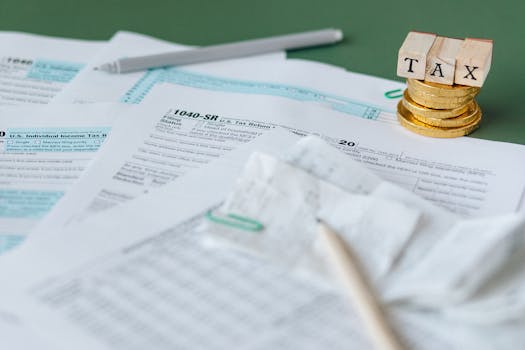
Stack of tax forms and coins with a 'TAX' stamp, symbolizing finance and accounting. Photo: Nataliya Vaitkevich / Pexels
Even with a clear understanding of assessment values, tax rates, and exemptions, several common pitfalls can lead to inaccuracies when you try to calculate property taxes. Avoiding these mistakes can save you both money and headaches, ensuring your financial planning is based on solid figures. **1. Confusing Market Value with Assessed Value:** This is perhaps the most frequent error. Your home's market value, what it could sell for today, is often different from its assessed value for tax purposes. Always use the *assessed value* provided by your local assessor's office for your calculations, not a real estate agent's estimate or an online valuation tool's market price. **2. Overlooking Available Exemptions:** Many homeowners fail to apply for homestead, senior, veteran, or other specific exemptions for which they qualify. These exemptions can significantly reduce your taxable value. Always research and apply for every exemption you are eligible for; they are not always automatically applied. **3. Using Outdated Tax Rates:** Property tax rates can change annually as local governments adjust their budgets. Relying on last year's rate or a generalized state average can lead to incorrect estimates. Always verify the current year's millage or percentage rate from your local county or city tax assessor's official website. **4. Incorrectly Applying Millage Rates:** If your tax rate is in mills, remember that 1 mill equals $1 per $1,000 of assessed value. A common mistake is to multiply by the millage number directly without dividing by 1,000 first, or forgetting to move the decimal point correctly. For example, a 20-mill rate is 0.02, not 0.20. **5. Ignoring Special Assessments:** Beyond the general property tax, some areas have special assessments for specific local improvements like new sewers, sidewalks, or streetlights. These are often added to your property tax bill. Failing to account for these can lead to an underestimate of your total annual payment. **6. Not Factoring in Reassessments:** If your property is in an area that undergoes periodic reassessments (e.g., every 3-5 years), your assessed value could change significantly. Be aware of your jurisdiction's reassessment schedule and factor potential changes into your long-term financial projections. **7. Failing to Appeal an Incorrect Assessment:** If you believe your property has been assessed too high, not appealing the assessment is a missed opportunity. Research the appeal process, gather comparable sales data, and present your case. Even a small reduction in assessed value can save you substantial money over many years. By being mindful of these common mistakes, you can achieve a much more accurate calculation of your property taxes and avoid unwelcome financial surprises. Diligence in gathering current data and understanding local nuances is key to precision.

Comparison

FeatureProperty TaxIncome TaxSales Tax
Tax BaseAssessed Property ValueTaxable IncomeGoods/Services Price
Collecting AuthorityLocal Governments (County/City)Federal/State GovernmentsState/Local Governments
PurposeLocal Services (Schools, Fire)Federal/State ProgramsState/Local Programs
FrequencyAnnual (or Semi-Annual)Annual (with Payroll Withholding)Per Transaction

What Readers Say

"This guide truly demystified how to calculate property taxes. I always found it so confusing, but the step-by-step breakdown made it incredibly clear. I feel much more confident in my budget now."

Sarah J. · Austin, TX

"As a first-time homebuyer, property taxes were a huge unknown. This article provided all the necessary details, from assessed value to exemptions. It's an essential read for anyone buying a home."

Mark D. · Orlando, FL

"I used the information here to double-check my property tax bill and realized I hadn't applied for a senior exemption! Thanks to this guide, I saved over $800 this year. Highly recommend it."

Emily R. · Boston, MA

"The content was very thorough, though I wish there was a quick calculator tool integrated. Still, the explanation of mills vs. percentages was invaluable and helped me understand my local rates better."

David L. · Seattle, WA

"Even for an experienced homeowner, this article offered fresh insights, especially on appealing assessments. It's a comprehensive resource for anyone looking to understand or challenge their property tax figures."

Jessica M. · Phoenix, AZ

Frequently Asked Questions

What is the difference between market value and assessed value?

Market value is what your property would likely sell for on the open market, influenced by supply and demand. Assessed value is a figure determined by your local tax assessor for taxation purposes, often a percentage of the market value, and is the basis for calculating property taxes.

Are property tax rates the same across all US states?

No, property tax rates vary significantly. They are set at the local level (county, city, school district) and can differ greatly even within the same state. Each jurisdiction determines its own rates based on local budgeting needs.

How do I find my property's assessed value and tax rate?

You can typically find your property's assessed value and the current tax rates on your local county or city assessor's or tax collector's website. Your annual property tax bill also lists these details. Many jurisdictions offer online search portals.

Can I dispute my property's assessed value?

Yes, if you believe your property has been inaccurately assessed, you generally have the right to appeal. The process usually involves filing a protest with your local assessor's office and providing evidence (e.g., comparable sales data, independent appraisal) to support a lower valuation. Be aware of filing deadlines.

How do property taxes compare to other types of taxes?

Property taxes are locally administered, based on property value, and fund local services like schools and infrastructure. In contrast, income taxes are levied by federal and state governments on earnings, and sales taxes are collected by state and local governments on goods and services sold.

Who benefits from property taxes?

Property taxes primarily fund local government services. This includes public education, police and fire departments, local road maintenance, parks and recreation, libraries, and other essential community services that directly benefit residents.

What happens if I don't pay my property taxes?

Failure to pay property taxes can lead to serious consequences, including penalties, interest charges, and eventually, a tax lien being placed on your property. In severe cases, repeated non-payment can result in the local government foreclosing on your home and selling it to recover the owed taxes.

Will property taxes always increase over time?

Not necessarily, but they often do. Increases can be due to rising property values (leading to higher assessments), increased local government spending (leading to higher tax rates), or the expiration of certain exemptions. However, rates can also decrease, or values can stagnate. It depends on local economic and political factors.

Armed with this comprehensive knowledge on how to calculate property taxes, you are now empowered to understand and forecast a significant portion of your homeownership costs. Take control of your financial planning by regularly reviewing your assessed value, staying informed about local tax rates, and actively seeking out any applicable exemptions. Your proactive approach will lead to greater financial clarity and peace of mind.

Topics: how to calculate property taxesproperty tax assessmentproperty tax ratesproperty tax exemptionsreal estate taxes
Leo List

IE Escorts NO Escorts US Escorts NZ Escorts AU Escorts
Brampton weed
Adultwork EstrelaBet Vai de Bet R7 Bet Betão Galera Bet Rainbet Bet9ja Shop SportyBet BetKing Sisal Loto Foot Hollywoodbets YesPlay Odibets RushBet Jugabet BetWarrior BetCity MSport betPawa Fortebet