
How to Become a Real Estate Agent in New York: Your Ultimate Guide
how to become a real estate agent in new york

How to Become a Real Estate Agent in New York: Your Ultimate Guide

Navigate the path to a thriving real estate career in the Empire State, from licensing to successful practice.

Start Your Journey

Key Takeaways

  • ✓ Must be 18 years old and a US citizen or legal resident.
  • ✓ Complete 77 hours of approved pre-licensing education.
  • ✓ Pass a state-administered licensing examination.
  • ✓ Associate with a licensed real estate broker to activate your license.

How It Works

1
Meet Eligibility Requirements

Ensure you are at least 18 years old, a U.S. citizen or permanent resident, and have a high school diploma or equivalent. These foundational criteria are non-negotiable for anyone aspiring to a real estate career in New York.

2
Complete Pre-Licensing Education

Enroll in and successfully complete an approved 77-hour real estate salesperson course. This comprehensive training covers essential topics like agency, contracts, property law, and ethics, preparing you for the state exam and practical work.

3
Pass the State Exam

After completing your education, you must pass the New York State Real Estate Salesperson Examination. This rigorous test assesses your understanding of real estate principles and New York-specific laws, requiring diligent study and preparation.

4
Secure a Sponsoring Broker

Once you pass the exam, you cannot operate independently. You must find a licensed real estate broker to sponsor your license application, which is a crucial step to legally practice real estate in New York.

Understanding the New York Real Estate Licensing Requirements

A woman in pink long sleeves studying multiple open books indoors. Photo: www.kaboompics.com / Pexels
Embarking on a career as a real estate agent in New York is an exciting prospect, but it begins with a clear understanding of the state's specific licensing requirements. The New York Department of State (NY DOS) oversees all real estate licensing, ensuring that all agents meet stringent educational and ethical standards. First and foremost, aspiring agents must be at least 18 years old. While this might seem straightforward, it's a foundational eligibility criterion that precedes all other steps. Additionally, you must be a United States citizen or a lawfully admitted alien. This legal status is essential for obtaining a license and engaging in real estate transactions within the state. Beyond age and legal status, a high school diploma or its equivalent is generally expected, though the NY DOS focuses more on the completion of the pre-licensing course itself as the primary educational benchmark. These initial requirements serve as the gateway to the real estate profession, ensuring that only qualified individuals can proceed to the next stages of licensure. The cornerstone of the New York real estate licensing process is the mandated 77-hour pre-licensing course. This comprehensive program is designed to equip prospective agents with a thorough understanding of real estate principles, practices, and New York-specific laws. The curriculum typically covers a wide array of topics, including property law, agency relationships, contracts, fair housing laws, real estate finance, ethical practices, and valuation methods. Choosing an approved education provider is critical; the NY DOS maintains a list of authorized schools, ensuring the quality and relevance of the instruction. Many providers offer flexible learning options, including in-person classes, online courses, and hybrid models, catering to various schedules and learning preferences. Regardless of the format, successful completion of this course is a non-negotiable prerequisite for taking the state licensing exam. It's not just about accumulating hours; it's about internalizing the complex legal and practical aspects of real estate that will form the bedrock of your career. This foundational education prepares you not only for the exam but also for the ethical and professional responsibilities inherent in serving clients in the dynamic New York real estate market. Understanding these intricate details is paramount to becoming a successful and compliant real estate professional. Learn more about real estate education options.

Navigating the New York State Real Estate Exam and Application Process

Two students in a classroom setting, focused on taking an exam with pencils in hand. Photo: Andy Barbour / Pexels
Once you've successfully completed your 77-hour pre-licensing education, the next significant hurdle is passing the New York State Real Estate Salesperson Examination. This exam is a critical step, designed to assess your comprehensive understanding of real estate principles, practices, and New York-specific regulations. The exam typically consists of multiple-choice questions covering all the topics from your pre-licensing course, including but not limited to contract law, agency, property valuation, fair housing, and land use. Preparation is key, and many aspiring agents utilize practice exams, study guides, and review courses to reinforce their knowledge. It's advisable to schedule your exam promptly after completing your coursework while the information is still fresh. The NY DOS provides detailed information on exam locations, scheduling, and procedures on their website. Passing this exam demonstrates your competency and readiness to enter the profession, signifying that you have absorbed the necessary knowledge to represent clients responsibly and legally within the state of New York. After successfully passing the state exam, you are on the brink of licensure, but one crucial step remains: securing a sponsoring broker. In New York, real estate salespersons cannot operate independently; they must be associated with a licensed real estate broker. This sponsorship is not merely a formality; it's a mentorship and oversight relationship that provides new agents with guidance, support, and access to a brokerage's resources and listings. Finding the right broker is a pivotal decision that can significantly impact your early career success. Consider factors such as the brokerage's reputation, training programs, commission splits, office culture, and the types of properties they specialize in. Many new agents conduct informational interviews with several brokers before making a choice. Once you have secured a sponsor, your chosen broker will submit your license application to the NY DOS on your behalf. This application will include proof of your completed education, passing exam score, and the broker's sponsorship declaration. The NY DOS will then review your application, and upon approval, your real estate salesperson license will be issued. It’s important to note that the license is issued to the broker, and you operate under their umbrella, making the broker-agent relationship foundational to your practice. This structured entry into the profession ensures that new agents receive proper supervision and adhere to professional standards from day one.

Building Your Real Estate Career: From License to Success in New York
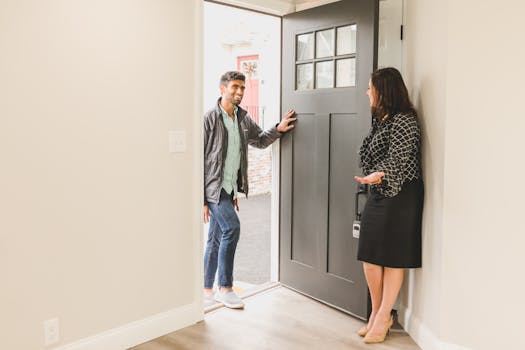
Real estate agent greeting a client at the entrance of a new home, symbolizing a welcoming embrace for potential buyers. Photo: RDNE Stock project / Pexels
Obtaining your New York real estate salesperson license is a monumental achievement, but it's merely the first step in building a successful and rewarding career. The real work begins after licensure, focusing on developing your skills, building a client base, and establishing your professional brand. One of the most critical aspects for new agents is continuous learning and professional development. While your pre-licensing course provides a foundational understanding, the real estate market is constantly evolving, requiring agents to stay abreast of new laws, market trends, and technological advancements. Many brokerages offer in-house training programs, workshops, and mentorship opportunities that can be invaluable for honing your negotiation skills, understanding local market nuances, and mastering client communication. Networking is another cornerstone of success. Attending industry events, joining local real estate associations, and connecting with other professionals – from lenders and inspectors to contractors and lawyers – can open doors to referrals and collaborative opportunities. Explore advanced real estate strategies. Developing a strong personal brand and effective marketing strategies are essential for attracting and retaining clients in a competitive market like New York. This includes creating a professional online presence, leveraging social media, developing a compelling personal website, and utilizing traditional marketing channels. Understanding your target demographic and tailoring your marketing efforts to reach them effectively will set you apart. For instance, specializing in a particular neighborhood, property type (e.g., luxury, commercial, rentals), or client segment (e.g., first-time homebuyers, investors) can help you carve out a niche and become a recognized expert. Building a robust sphere of influence through past clients, friends, and family is also incredibly powerful, as referrals often become your most reliable source of new business. Ethical conduct and impeccable client service are paramount; a reputation for integrity and going above and beyond for clients will foster trust and generate repeat business and positive word-of-mouth. The initial years in real estate often require significant dedication, resilience, and a proactive approach to learning and networking. However, with perseverance and a commitment to excellence, a career as a real estate agent in New York can offer immense personal and financial rewards, allowing you to play a vital role in people's significant life decisions.

Common Mistakes and Essential Tips for New York Real Estate Agents

Confident woman in business attire sits on a sofa, exuding professionalism. Photo: Alena Darmel / Pexels
Entering the New York real estate market as a new agent can be exhilarating, but it's also fraught with potential pitfalls. Avoiding common mistakes can significantly accelerate your path to success. One frequent misstep is underestimating the time and financial investment required. Real estate is not a get-rich-quick scheme; it demands consistent effort, ongoing education, and often, initial financial outlays for marketing, association fees, and technology. Many new agents also fail to adequately plan for inconsistent income in the beginning, leading to financial stress. It's crucial to have a financial cushion to sustain yourself during the initial months. Another common error is neglecting professional development post-licensing. The 77-hour course is just the start; the market is dynamic, and staying current with legal changes, technological tools, and market trends is vital. Over-relying on a single lead source or neglecting networking opportunities are also detrimental. A diverse lead generation strategy and a strong professional network are indispensable. To thrive in the competitive New York real estate landscape, implement these essential tips: * **Embrace Continuous Education:** Beyond mandatory continuing education, seek out advanced courses in negotiation, marketing, or specific property types. The more you know, the more valuable you become to clients. * **Build a Strong Network:** Attend industry events, join local real estate boards, and actively connect with other agents, lenders, inspectors, and contractors. Referrals are a lifeline in this business. * **Leverage Technology:** Utilize CRM software, social media platforms, virtual tour tools, and other digital resources to streamline your operations, market properties effectively, and connect with clients. * **Specialize Early:** Consider focusing on a particular neighborhood, property type (e.g., co-ops, condos, multi-family), or client demographic (e.g., first-time buyers, luxury market). Specialization helps you become a recognized expert. * **Master Your Local Market:** Deeply understand the nuances of the neighborhoods you serve – average prices, school districts, amenities, and future developments. This local expertise is invaluable to clients. * **Develop a Robust Marketing Plan:** Create a professional online presence, including a website and active social media profiles. Consistent branding and targeted content will attract prospective clients. * **Prioritize Client Relationships:** Excellent communication, responsiveness, and genuine care for your clients' needs will build trust, generate repeat business, and lead to valuable referrals. * **Find a Mentor:** Seek guidance from an experienced agent or broker who can offer practical advice, share insights, and help you navigate complex situations. Mentorship can be a game-changer for new agents.

Comparison

FeatureReal Estate SalespersonReal Estate BrokerAssociate Broker
Education Hours77 hours152 hours152 hours
Experience RequiredNone (post-course)2 years as salesperson2 years as salesperson
Can Operate Independently?✗ (under another broker)
Sponsorship Required?✓ (if not principal broker)

What Readers Say

"This guide was incredibly helpful in demystifying how to become a real estate agent in New York. The step-by-step breakdown made the process feel much less daunting and more achievable."

Sarah J. · Brooklyn, NY

"I followed the advice on finding a sponsoring broker, and it led me to a fantastic firm that aligns with my career goals. This article is a must-read for anyone considering real estate in NY."

Mark D. · Manhattan, NY

"The details on the 77-hour course and exam preparation were spot on. I passed my New York state exam on the first try, largely thanks to understanding the process outlined here."

Emily R. · Queens, NY

"While focused on NYC, the core principles for how to become a real estate agent in New York apply statewide. The tips section on avoiding common mistakes was particularly valuable for a new agent like me."

David L. · Buffalo, NY

"As someone transitioning careers, the breakdown of what to expect after getting licensed, especially regarding continuous learning and networking, gave me a clear roadmap for success."

Jessica M. · Long Island, NY

Frequently Asked Questions

What are the absolute minimum requirements to become a real estate agent in New York?

You must be at least 18 years old, a U.S. citizen or legal resident, complete a 77-hour approved pre-licensing course, pass the New York State Real Estate Salesperson Examination, and be sponsored by a licensed New York real estate broker.

Is it difficult to pass the New York real estate exam?

The New York real estate exam is comprehensive and requires diligent study. With proper preparation from your 77-hour course and additional study aids, it is certainly passable, but it's designed to ensure agents have a thorough understanding of state laws and practices.

How long does it typically take to get a real estate license in New York?

The timeline varies, but generally, completing the 77-hour course can take anywhere from 2 weeks (intensive) to several months (part-time). Factor in study time for the exam, scheduling the exam, and the application processing time, and you're looking at 2-6 months on average.

What is the total cost to become a real estate agent in New York?

Costs typically include pre-licensing course fees ($300-$700), state exam fee ($15), license application fee ($55), and potential costs for fingerprinting, study materials, and initial brokerage fees/association dues. Expect a total initial investment ranging from $500 to $1,500.

Can I work as a real estate agent part-time in New York?

Yes, it is possible to work part-time as a real estate agent in New York, but success often requires significant time investment, especially early on. Many agents start part-time and transition to full-time as their business grows.

Who should consider becoming a real estate agent in New York?

Individuals who are self-motivated, enjoy working with people, possess strong communication and negotiation skills, have a passion for real estate, and are prepared for a commission-based income structure are well-suited for this career in New York.

What are the risks associated with starting a real estate career in New York?

Key risks include inconsistent income, high competition, the need for continuous self-motivation, and the significant time investment required to build a client base. However, these risks are often outweighed by the potential for high earnings and career flexibility for dedicated individuals.

How is the New York real estate market expected to change in the coming years?

The New York real estate market is dynamic, influenced by economic trends, interest rates, and population shifts. Experts predict continued demand, particularly in urban centers, with an ongoing emphasis on digital tools and evolving client expectations for personalized service and sustainable living options.

Ready to launch your exciting new career? By following this comprehensive guide, you are now equipped with the essential knowledge on how to become a real estate agent in New York. Take the first step today and unlock your potential in the Empire State's vibrant real estate market!

Topics: how to become a real estate agent in new yorkNY real estate licensereal estate career New YorkNew York real estate exambrokerage New York
Leo List
Brampton weed
Adultwork